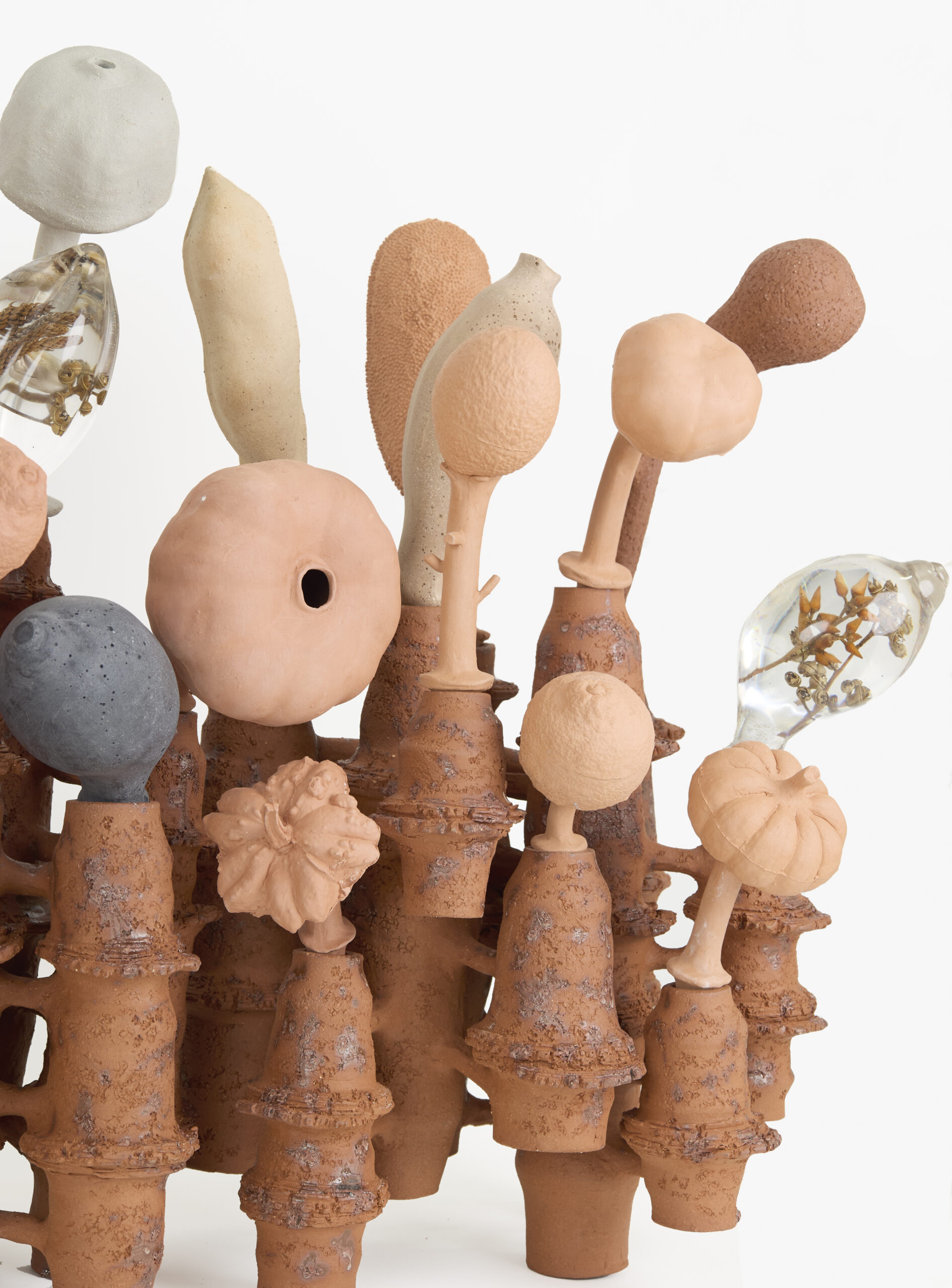
Terra Strata reclaims suppressed ecologies to reimagine history as a field of entangled, more-than-human narratives. Challenging the anthropocentrism of dominant history, it positions plants and insects not as passive backdrops but as active agents whose forced circulation, cultivation and control shaped colonial expansion, racial hierarchies and capitalist accumulation.
Botanical gardens serve as key sites of inquiry. Through archival research at Kew Gardens in London and collection of plant material from Bangalore’s Lal Bagh, it traces how the two were historically linked through extractive colonial networks. Extending beyond institutional archives, foraging here becomes a method of engaging a living archive, mapping the material residues of imperial botany embedded within these landscapes.
Termites, in consuming paper and wood, unsettled the material foundations of the colonial state. Once regarded as ecological indicators in ancient cultures, they were recast within colonial discourse as markers of “uncivilised” lands requiring control. This shift, entangled with imperial trade and nineteenth-century racial ideologies, marginalised alternative ways of knowing.
Bringing these botanical histories into dialogue with clay structures inspired by termite mounds, the work dwells on the violence of repositioning land, plant and animal worlds, full of spirit and agency in indigenous narratives, into “natural resources” for extractive economies, and how these colonial patterns of exploitation continue to underpin contemporary social and ecological challenges.
–